
About Fictions about shelters and accidental communities
Pilar Villela. June 2023.
We believe we have found the invention of the war machine among the nomads.
Deleuze and Guatari, Treatise on nomadology- The war machine 1
Pointlessly accumulating material, stacking it haphazardly, and hanging it give it a provisional
form. Chance is accepted and the indeterminate is implied, to the extent that replacing anything
would result in another configuration.
Robert Morris, Antiform 2
Rubén says that his work is made of fragments that refer to broader narratives, but absent. He says that they aim for stories that are not developed, but only suggested by what he presents in photography, video, drawing or text. Perhaps this use of the fragment has something from the film trailer that barely allows us to see what the movie is about. Also, perhaps, his work has something of that taste for ruin and fragmentation with which romanticism aspired to build bridges with the ineffable and with the absolute. I am certain that the ideas that I present below are not present in Rubén’s work. Instead, I focus on what I see without it being there, I trust that it is like the same psychoactive substance or a Zeitgeist that produces similar perceptions in individuals who are thinking totally different things, but they are still human and what are we going to do? it was their turn to live: we were born when modernity was collapsing and we continue to witness the collapse – boring, long and in slow motion – of its little sister, postmodernity. At the dawn of the 1970s, after the Torres de Satelite and the Ruta de la Amistad, Goeritz recalled the ambitions he had had after building the Towers and before completing the Route: The idea was to erect on (the highways that cross Mexico from north to south and from east to west) groups of towers or gigantic primary forms (…) in underdeveloped or even deserted regions. Stations could be built around these structures that would begin by having hotels, gas stations, and small regional museums of pre-Hispanic or popular art so that they could become centers for automotive tourism. The objective of this plan was not only to create a series of stations for tourists, but to encourage the development of new populations with local industries around them (…) Perhaps fortunately, neither the country nor the money gave him for such wild ambitions. Although, in the same article, Goeritz hesitates regarding the background of his project, referring to those he knew at the time of conceiving it and those he met later, it is difficult not to find parallels (paraeidolia) between his enthusiastic highway developmentalism and the populations generated by the construction of temples and pilgrimage routes in the late Middle Ages where, as in the work of Goeritz, trade and fervor went hand in hand and where it was a question of interrupting a flow, of producing roots from the mobility. A decade earlier, in Gangland et Philosophie, Attíla Kotanyi -another immigrant, in other latitudes-, listed the conditions of an opposite utopia, in every sense, even in the omission of the occupation of “virgin lands”, with which he fantasized Goeritz:
Here we should develop a small glossary of deviant vocabulary (detourné). I propose that many times when you say “neighborhood” you should read “cartel territory.” In the same way social organization = protection; society = organized crime; culture=conditioning; leisure = protected criminal activity; education=premeditation.
¨The integral art of which so much has been said can only be carried out at the level of urbanism” (Debord). That is, in fact, where the limit is. It is on that scale that it becomes possible to remove certain decisive elements of conditioning. However, if we wait for the magnitude of the scale to be sufficient to generate favorable results, we will have made the most serious of mistakes.
Neocapitalism has also found some advantages on the large scale. Day and night he does not talk about anything other than urban planning and national development. But, obviously, his real concern is the conditioning of the production of merchandise that, according to him, would escape him if he did not resort to this new scale.
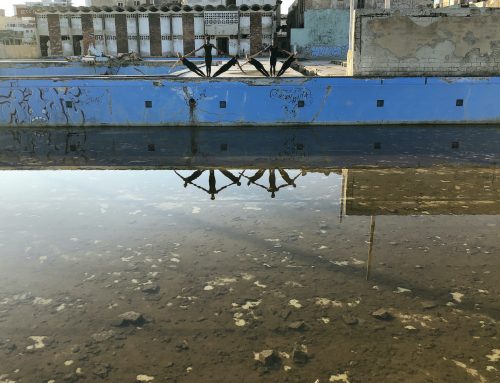
All these references correspond to that world that I see, squinting my eyes, and that has remained inevitably in the past. Now our debates are different, our concerns, perhaps because either as descriptions or as programs, a part of all these programs of the past exists materially in the present: the monuments languish among the street stalls and the business towers, the situationist desires are now “activations” that happily take the living forces of gentrification by the hand, the parallels between the mafias and social organization are current currency, the anti-form sculptures refer to the piles of waste generated by “fast fashion”. In this exhibition, Rubén’s work approaches the “safe spaces” that give rise to his refuges. These safe spaces present a somewhat sinister genealogy that is not only that of the meeting places for threatened minorities such as women or homosexuals in the United States in the 1960s, but the one assigned to them by their creator, psychologist Kurt Lewin, one of the founders of “organizational psychology”. Lewin conceived these spaces as places where one could complain about the clerks or even the boss himself without fearing reprisals. These complaints could then be instrumented to make the organization more efficient. All the characters in Rubén’s fragmentary fictions carry conflicting, contradictory links with the spaces they inhabit as if they were in a state of suspended animation: the minimalist spheres of Forzar la puerta del presente wander aimlessly in the space of exception of the exhibition hall, knowing that if they lost their protection, they would also lose their exceptionality, trapped in the art/life aporia for more than a century. The characters in Imaginary Friends refer to some plastiline nano dolls that the artist treasured, as a child, under his bed, but also to his ancestors, an army of tin soldiers before or after the battle. The piles of clothing that cover the monuments of Nueva Ruta de la Amistad and that simulate temporary shelters for groups of nomadic adolescents deprive the monuments of their function of providing order and certainty in the urban space, but they also project a situation that, unlike Deleuze and Guattari describe in their famous treatise, do not coexist with other forms of organization to which they oppose, but are only a moment in an unfolding drama: the nomadic adolescents have separated from their parents, but still they have not grown. Unlike the members of Peter Pan’s Lost Boys tribe, they will inevitably grow up. In its tension between the fluid and the static, between the minute scale and the monumentality, perhaps its fragment is not that of the ruin of romanticism, but that of a stopped time, a prolonged interregnum that dreams of mythical pasts while it has lost the course of its possible continuity.